

China’s AI Boom: A Global Wake-Up Call for Robotics in Everyday Business
Across industries, countries, and boardrooms, one fact is becoming increasingly clear: robotics and AI are no longer distant disruptors—they are defining features of modern business. What was once speculative is now operational.
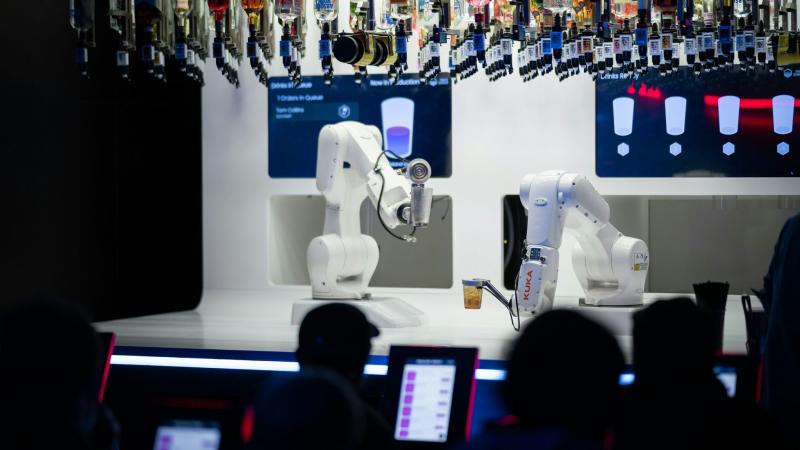
Robotics and AI are no longer distant disruptors
Across industries, countries, and boardrooms, one fact is becoming increasingly clear: robotics and AI are no longer distant disruptors—they are defining features of modern business. What was once speculative is now operational. And no example illustrates this better than what’s unfolding in China today.
In early March, a Chinese-developed AI chatbot named Manus attracted such a surge of public interest that its registration system crashed within hours of launch. It wasn’t an isolated event. The country’s AI darling, DeepSeek, had already stunned global observers with a high-performance language model trained at a fraction of the cost of Western systems like GPT.
But these headlines weren’t just about competition between algorithms. They signaled something deeper—and far more relevant to businesses worldwide: AI is now an infrastructure layer, not just a software breakthrough. And increasingly, it’s being deployed where the digital meets the physical—through robotics.
As The Economist reports in its March 2025 issue, China is experiencing a rare convergence: massive investment, policy alignment, and commercial readiness are transforming AI from an innovation story into a full-blown industrial movement.
The implications? Global. Especially for Europe.


A Shift from Hype to Hardware
What distinguishes this boom from those in the past is how deeply embedded AI already is in China’s real economy. From municipal apps to university platforms, from public hospitals to state-owned energy companies, AI—particularly large language models like DeepSeek—is being integrated directly into day-to-day services.
The link to robotics is clear. A new generation of robots is emerging in parallel—cleaning bots, delivery units, reception assistants, smart service carts—built with embedded AI for better perception, communication, and decision-making.
Venture capital firms in China are betting heavily on this integration. As The Economist reports, some investors describe seeing cost reductions and performance improvements in their robotics portfolios simply by embedding DeepSeek’s tech. Even hardware suppliers are adapting. Sales of “all-in-one” AI servers tailored for real-world robotics and cloud integration are projected to grow by 70% annually through 2028.
A Model Europe Can’t Ignore
Of course, China's growth model—fueled by state-backed investment and scaled manufacturing—is not something Europe should replicate wholesale. But it does offer a preview of what's now technologically and commercially possible.
And that’s the point: adoption is no longer speculative.
The tools being used in Shenzhen hospitals and Hangzhou hotels aren’t experimental. They are field-ready, cost-optimized, and increasingly accessible to organizations around the world—including in Central and Eastern Europe.
In fact, they represent the biggest shift in robotics since industrial automation. Not because of their novelty, but because of their affordability, modularity, and immediate utility.


A New Readiness Threshold
This moment presents both a challenge and an opportunity for European businesses and institutions:
- Access to mature robotics technology is now easier than ever.
- Cost barriers have dropped dramatically over the past five years.
- Integration pathways—especially for service, hospitality, logistics, education, and care—are clear and documented.
Yet many still view robotics as either too futuristic or too risky to prioritize. That perception gap is the real obstacle now.
As The Economist notes, the AI boom in China is encouraging even mid-sized companies to act—not because of hype, but because of strategic necessity. And while there are valid cautions around sustainability, chip supply, or overvaluation in China, the applied use of robotics is already proving itself.
The question isn’t whether Europe can wait until robotics becomes mainstream.
It’s whether we realize that it already is.
Quiet Momentum, Real Impact
Across Central and Eastern Europe, we’re seeing a quiet shift.
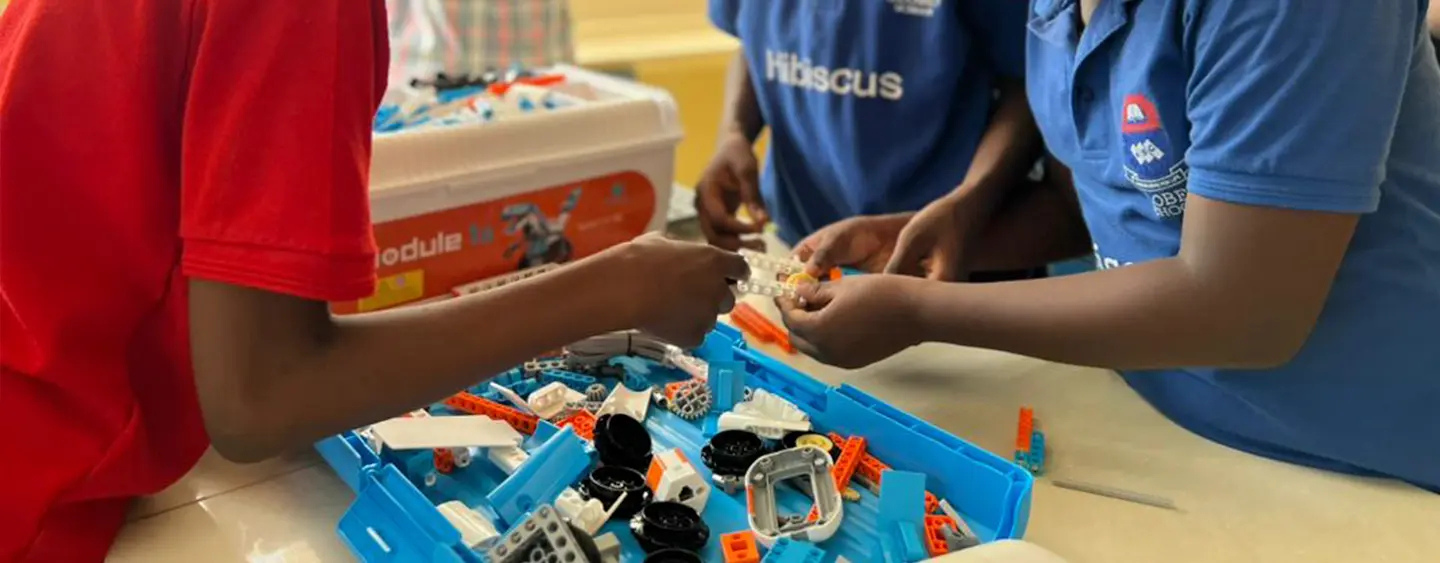
- Schools are introducing programmable robots to teach computational thinking.
- Hotels are piloting robotic room service or reception solutions.
- Municipal offices are exploring mobility and accessibility robots for public use.
- Care institutions are testing assistive robots to support understaffed teams.
These aren’t grand experiments—they’re modest, often low-cost integrations. But collectively, they signal the beginning of a larger transformation.
And while no single company can match the scale of China's internal market, collaborative ecosystems—between European integrators, Asian manufacturers, and local partners—are emerging to fill that gap.

What GreatRobot Sees
At GreatRobot, we’re closely following these global developments, not with alarm—but with focus.
We believe robotics is no longer about “what could be.” It’s about what can be done today. That’s why our work is centered on:
- Connecting proven robotics technologies with everyday use cases.
- Supporting practical, small-scale deployments in schools, hotels, clinics, and public buildings.
- Offering flexible acquisition models (rental, leasing, rent-to-own) so that robotics adoption fits different budgets and speeds.
The robotics revolution is not about humanoids walking down high streets. It’s about delivery robots that reduce workload, companion bots that educate or entertain, and cleaning robots that free up human staff for more important tasks.
As we see it, Europe’s edge lies not in building all the tech from scratch—but in applying it meaningfully, responsibly, and quickly.
The Time Is Now
What’s happening in China is not just about AI leadership. It’s about how economies recalibrate around new technologies. The question isn’t whether robotics will enter the European workplace. It’s whether we’ll integrate it on our terms, with our values, and with solutions that match our real-world needs.
The opportunity is here. The tools are ready. And the wake-up call has already rung.
The only question left is: how ready are we to use them? Contact us to discuss applications for your business.