


Tackling Workforce Challenges of Adriatic Hospitality Through Automation and Robotic Solutions
The Adriatic hospitality sector has one of the most complex workforce challenges in Europe. Region if facing ageing and shrinking population, seasonality, short-term employment schemes and mobility and work permit issues. Consequently, staff turnover is often above 40% so that every June feels like onboarding a new company. Due to seasonality, there is low loyalty of workers who are also not skilled enough to provide for the expected level of quality which limits luxury positioning.

Chronic Lack of Workforce
If we take only Slovenian and Croatian coastal region there is around 20.000 workers lacking in the sector which is around 15-20% of the total workforce in hospitality. There is a chronic lack of waiters, chefs, housekeeping, receptionists. Local workforce left for Germany, Austria, and Ireland whereas third country employees are difficult to acquire due to long and complicated administrative procedures.
Filipino and Nepal staff speak English, but guests are German/Italian. Balkan staff speak also German/Italian but have no service culture. Staff are good with basic serving but fail at upselling and guest personalization and are not experienced in using digital tools.
Systemic Solutions
There are various systemic solutions which can be implemented to tackle workforce issues. Employers need to provide different strategies and incentives to attract, retain, and upskill the workforce such as recruiting and onboarding globally, provide full year employment schemes, provide adequate training and housing, implement bonus models on upsell and guest-feedback-based incentives. However, this is not enough to keep up operations and be cost-effective.
Automation and Robotics – Amplifying Human Performance
In hospitality human interaction is key to providing a good service. The human touch can never be fully replaced by a machine. However, due to the chronic lack of workforce the strongest business opportunity for Adriatic Hospitality is intelligent automation and robotics which can help fill the gap.
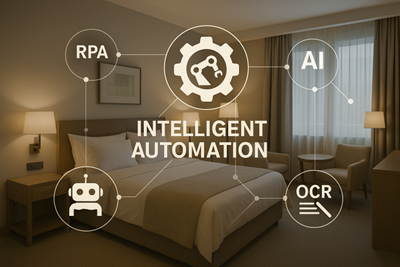
Intelligent automation can bring substantial value add in daily operations, customer experience and upselling. It combines robotic process automation (RPA) and artificial intelligence (AI) which enables you to design intelligible virtual employees to take over the repetitive mundane tasks which are delivered 24/7 and are reliable, consistent and efficient, so employees can focus on personalization.
To name a few automation solutions span from digital check-in and in-room digital buttler/voice bot for enhancing customer experience, workforce scheduling, housekeeping auto-dispatch and inventory and ordering automation to increase operational efficiency, invoice and payroll automation for efficient back office.
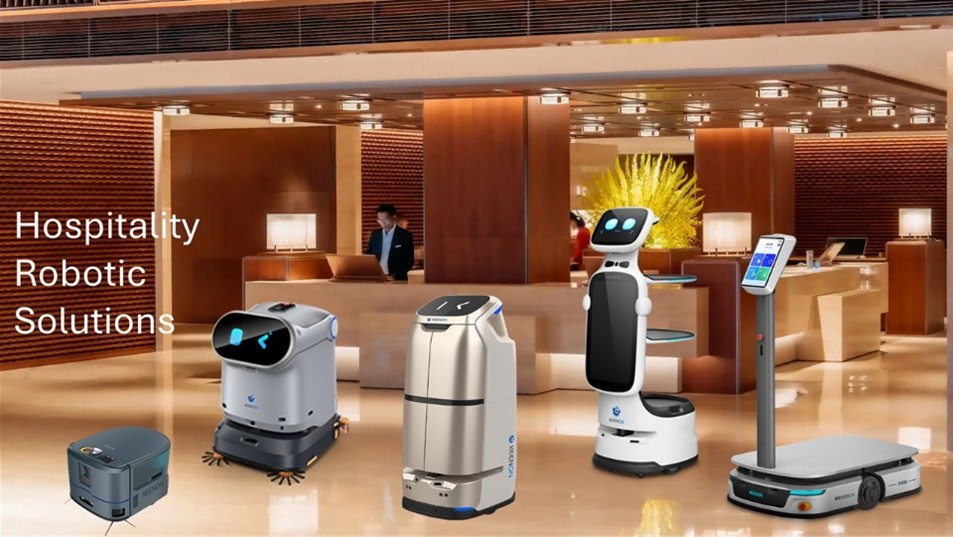
Chronic lack of waiters, chefs, housekeeping, and receptionists further require investing in robots. Robotic solutions span from cleaning and vacuuming robots, room service and restaurant delivery robots, heavy weight delivery robots to reception robots. Available service robot solutions are functional, affordable and adaptable, that is why in most Adriatic properties they provide for quick return with an average ROI of 3–5-month. Seasonal peaks additionally amplify the value of flexible/automated solutions that scale up quickly without large recruitment.
Of course, there are second thoughts and objections such as “Robots are cold with no Adriatic soul” and sometimes staff is afraid of being replaced. However, robots are not there to replace hospitality, but to amplify human performance. Robots are there to handle repetitive, logistical and physically demanding tasks. Human staff can then focus entirely on guest interaction, upselling, personalization and VIP care.
Having chronic workforce challenges various systemic solutions alone cannot compensate the gap therefore automation and robotic solutions are becoming a strategic necessity in the Adriatic hospitality sector.